

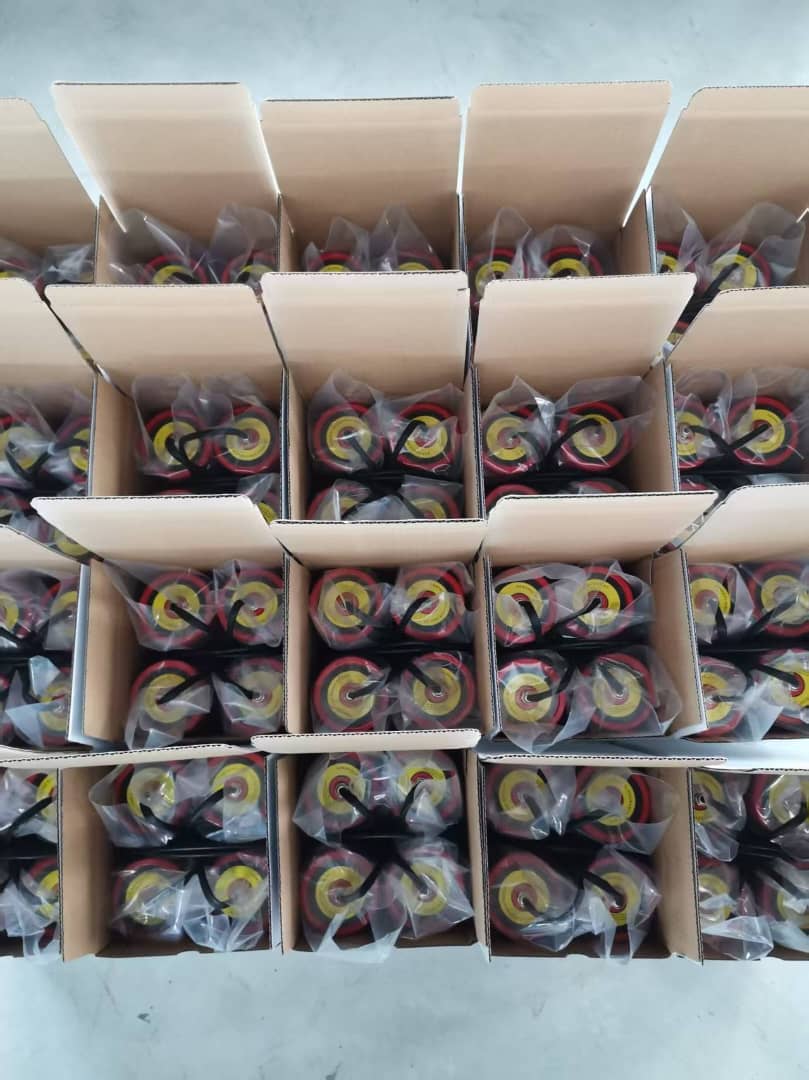
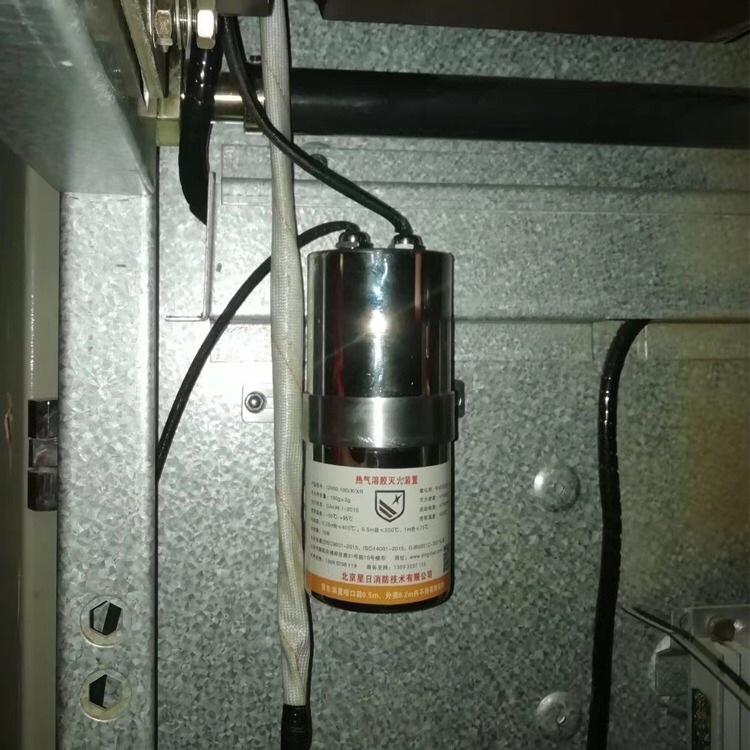
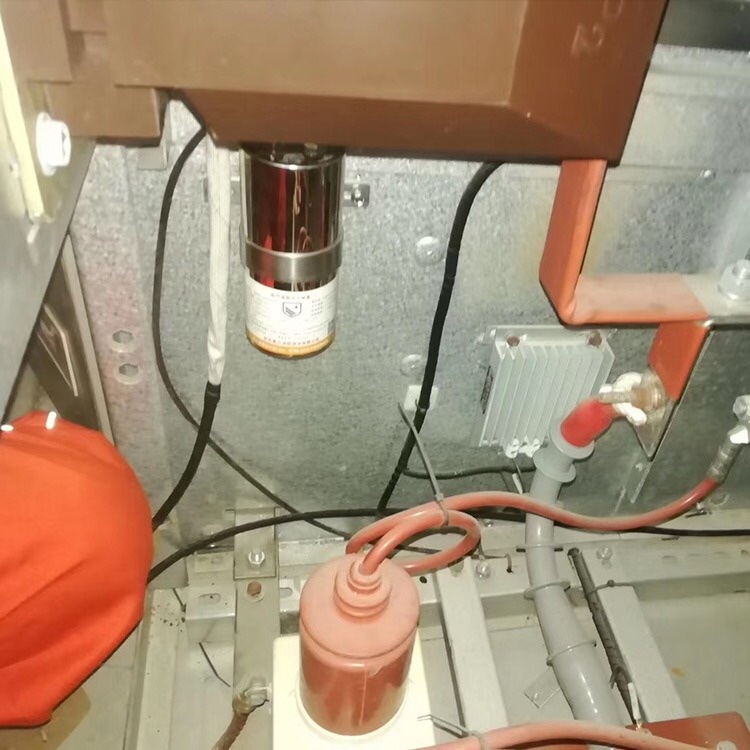
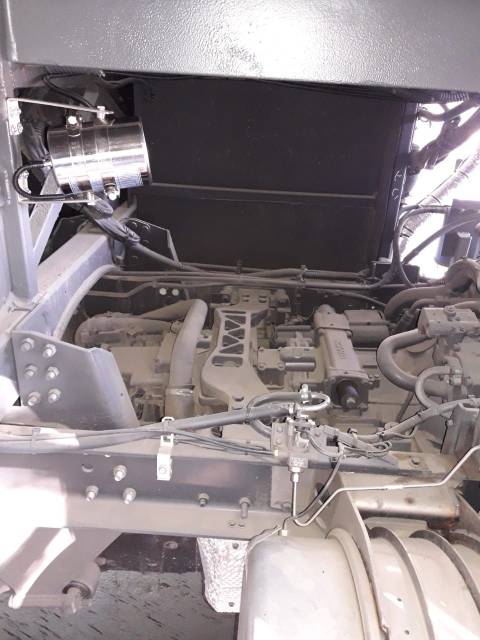
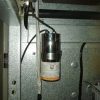
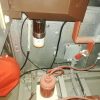
Automatic aerosol fire extinguisher
€90.00
Description
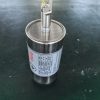
Electrical Activation Aerosol Fire Extinguisher Fire Suppression Systems
Automatic Aerosol Fire Extinguisher Device For Vehicle Engine Room
Aerosol Fire Extinguisher Product Introductions
Aerosol fire suppression is a particle-based form of fire extinction similar to gaseous fire suppression or dry chemical fire extinction. The aerosol employs a fire extinguishing agent consisting of very fine solid particles and gaseous matter to extinguish fires. The condensed aerosol microparticles and effluent gases are generated by the exothermic reaction; until discharged from the device, the particles remain in vapor state. They are cooled and “condensed” within the device and discharged as solid particles. Compared to gaseous suppressants, which emit only gas, and dry chemical suppression agents, which are powder-like particles of a large size (25–150 micrometres), condensed aerosols are defined by the National Fire Protection Association as releasing finely-divided solids of less than 10 micrometres in diameter. The solid particulates have a considerably smaller mass median aerodynamic diameter (MMAD) than those of dry chemical suppression agents, remain airborne significantly longer, and leave much less residue within the protected area. Whereas dry chemical systems must be directly aimed at the flame, condensed aerosols are flooding agents and therefore effective regardless of the location and height of the fire. Wet chemical systems, such as the kind generally found in foam extinguishers, must, similarly to dry chemical systems, be sprayed directionally onto the fire. The condensed aerosol agent can be delivered by means of mechanical operation, electric operation, or combined electro-mechanical operation.
Aerosol Fire Extinguisher Product Features
◆◆◆ Environmentally Friendly;
◆◆◆ Simple to Install and Non Maintenance;
◆◆◆ No Pressurised Cylinder or Pipe Work;
◆◆◆ Cost Effective;
◆◆◆ Tests and Certification.
| Series | Aerosol Fire Extinguisher |
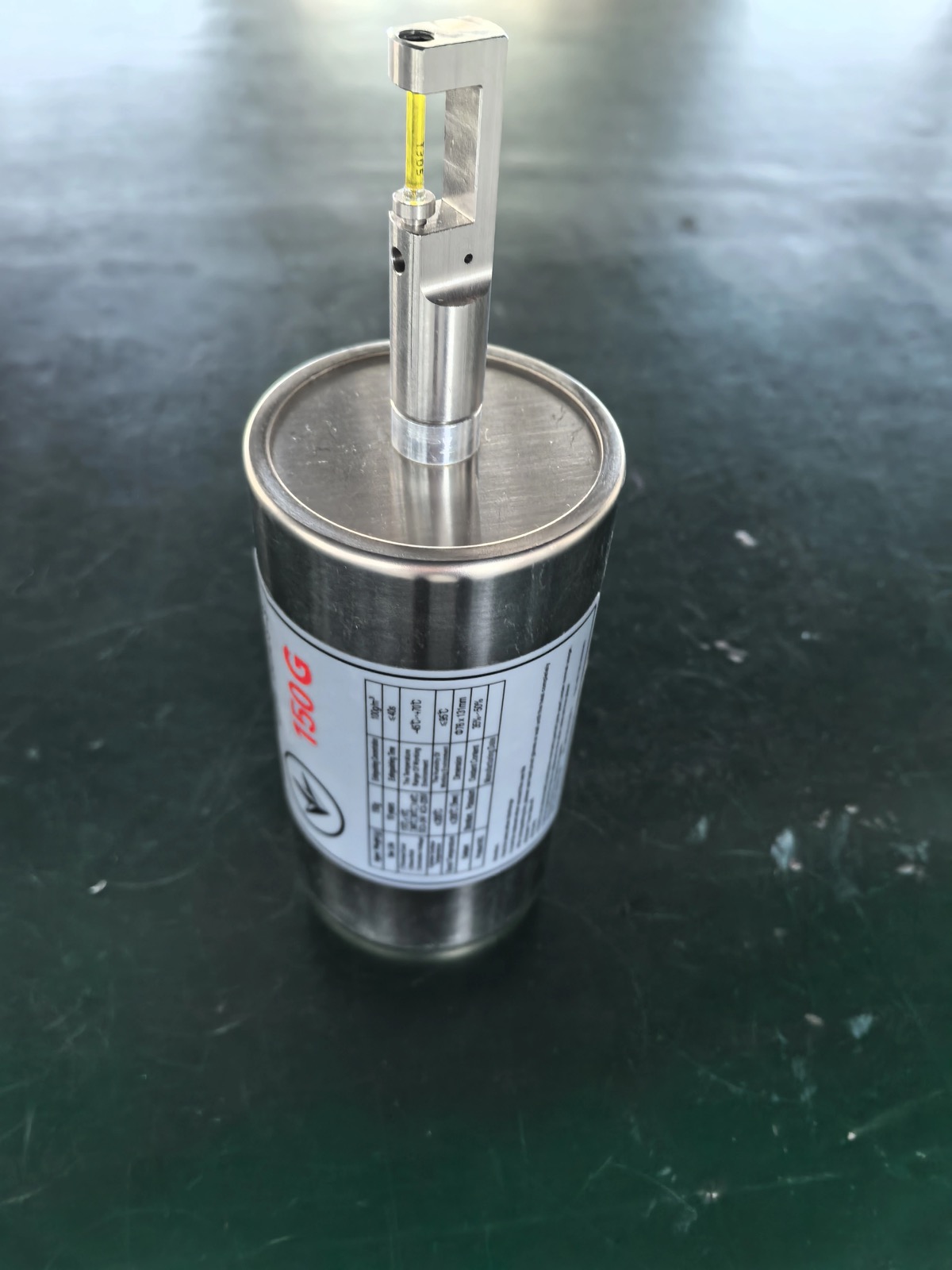
| Activation Method | Electrical/Thermal Cord/Glass Bulb Activation |
| Material | 304 stainless steel |
| Install Type | DIY easy install |
| Shell Material | 304 stainless steel polishing |
| Certification | CE/CCC/ISO9001/GA499.1-2010 |
| Extinguishing Time(s) | ≤30 |
| Equipment weight(kg) | 4.6 |
| Elixir Weight(g) | 500 |
| Shall surface temperature | ≤100℃ |
| Start voltage | DC3~24/AC3-220V |
| Min activation current | ≥250mA/5mS |
| Max safety current | ≤150mA/5mIN |
| Fire suppression type | A,B,C,E |
| Temperature range | -40~ +108 ℃ |
| Operation(Discharge) Time(s) | 18 |
| Size(mm) | ø127*185 |
| Spout Temperature | ≤200℃ |
| Use Life | 10 years more |
| Installing Bracket | L bracket |

3.Off-vehicle
4.Bus
5.Coach
6.Remote storage
7.Motor control centers
8.Remote pump houses
9.Manhole and high voltage underground services
10.Communications
21.Cable trays and electric cabinets
22.Bus engine compartments
23.Rolling stock engines
24.Electrical equipment
25.Lifting equipment
26.Specialty vehicles
27.Battery compartments (lead acid)
28.Power generation buildings
29.Motor control centers
30.Off-road vehicles engine compartments
31.Tunneling equipment
32.CNC machines
33.Flammable liquid storage
34.Electrical rooms
35.Pharmaceutical plants
36.Duct protection (non-explosive)
37.Dust collectors (non-explosive)
38.Robots
39.Food processing
40.Elevator machine rooms
41.Chemical storage
42.Glove boxes
43.Enclosed fume hoods
44.Gas turbine enclosures
45.Generator rooms
46.Switch gear rooms
47.Battery rooms (lead acid / lithium ion)
48.Wind turbine nacelles and power rooms
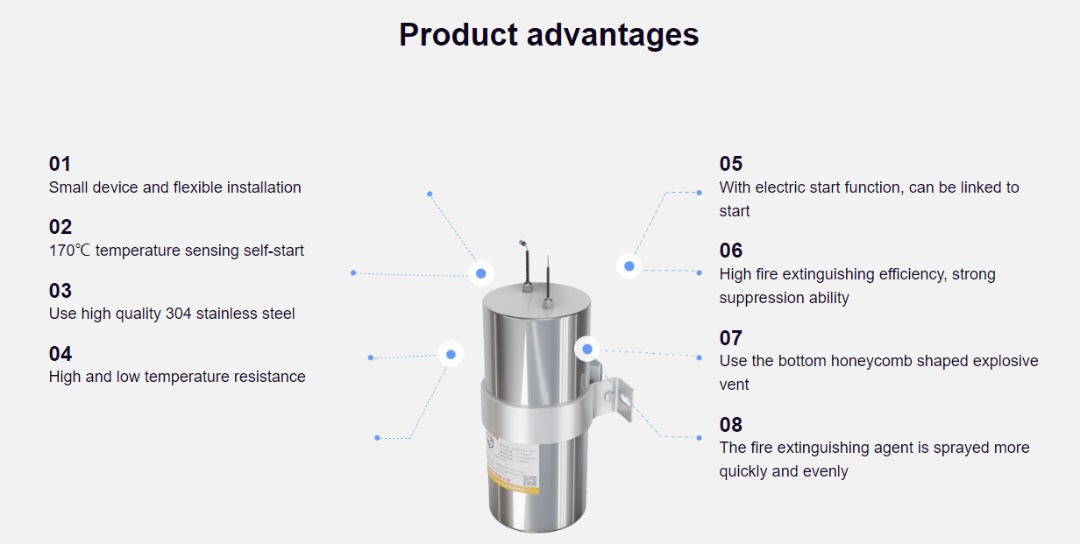
Aerosol Fire Extinguisher Start Model — (Passive) Heat self-startup
(Passive)Heat Self-start up:Using the fire detection harness pre-set in the protected area. Once the temperature on the protected area rise to the startup temperature(175±10℃)of fire detection harness, the harness can start the extinguishing device in a second and release extinguishing gas to put out the fire.
Aerosol Fire Extinguisher Uses and Application Scope
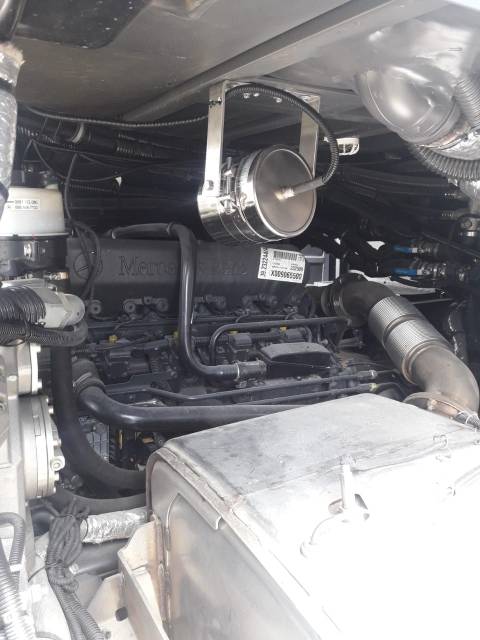
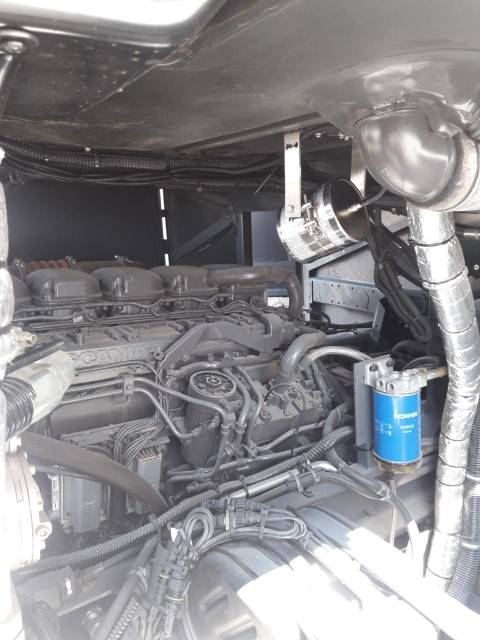
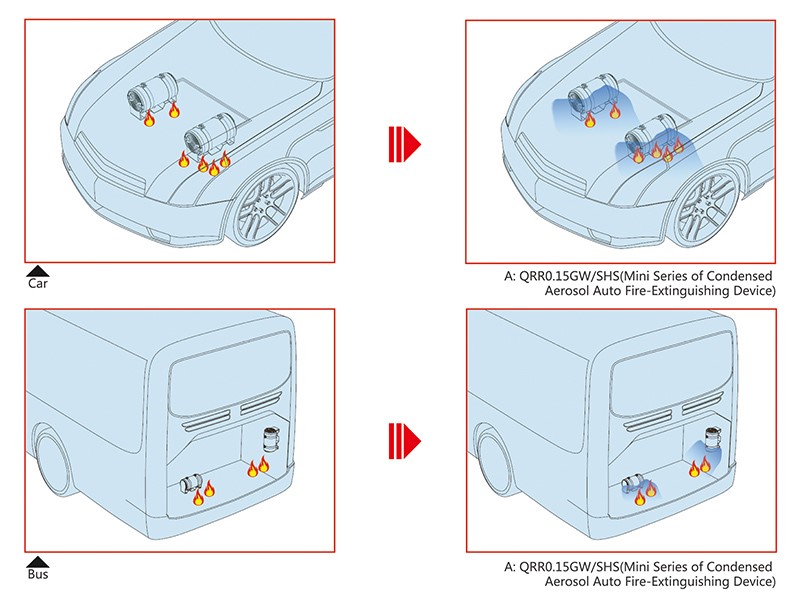
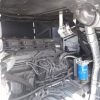
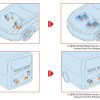
◆◆◆ Engine Room of Vehicle;
◆◆◆ New Energy Battery Compartment;
◆◆◆ Electric cabinet;
◆◆◆ Electric equipment box or room;
◆◆◆ Ect.Relatively closed space.
……
There are two uses for applying fire extinguishing agents: as a total flooding fire protection system or as a local application fire suppression system.
To provide total flooding fire suppression, the total quantity of aerosol required to extinguish a fire inside of fixed space must be determined. The corresponding number of aerosol devices that would collectively discharge the aerosol quantity required are then mounted, typically on the ceiling or wall. Aerosol devices equipped with electric initiators are interconnected and relayed by a fire alarm control panel. Because the aerosol devices are self-contained and function as both a storage container and as a nozzle that propels the gas, no distribution network is required to transport or distribute the fire-extinguishing agent from a remote storage location, resulting in floor space savings and transportation efficiency gains.
Local application fire suppression is typically applied by a handheld portable device tossed directly toward the fire. Unlike streaming portable fire extinguishing units, the operators are not required to place themselves at risk by approaching the fire while applying the extinguishing agent directly at the flames. The portable condensed aerosol device is typically designed to disperse aerosol in a 360° spray pattern, forming a large aerosol cloud around the vicinity of the fire. The aerosol immediately attacks the flames as its particles approach the fire and generate flame-neutralizing potassium radicals. The flames are suppressed as long as the aerosol retains sufficient density. If the aerosol fails to achieve sufficient density to extinguish the fire, it will still suppress the fire, which will retain significantly lower heat. This offers firefighters, for instance, a tool to bring down flames to a manageable heat level and reduce room temperatures while the hose team enters the burning area. As another example, First Responders can deploy condensed aerosols within an enclosed area to suppress fires while evacuating occupants to safety.
Condensed aerosol systems are suitable for special hazards applications as replacements for Halon 1301 systems and high-pressure carbon dioxide systems. Aerosol systems can also be used as alternatives to clean agent gaseous suppressants or water-mist systems.
Requirements for the Install Environment
◆◆◆Temperature:-50℃~+90℃;
◆◆◆Humidity:≤95%;
◆◆◆ Space:Protected Areas are closed or relatively closed.
Reviews
There are no reviews yet.